Vedic Age : Vedas [1500 BCE – 600 BCE] :-
Vedic Age refers to the time when vedic sanskrit texts were composed in India. There are mainly four vedas namely – RIGVEDA, SAMAVEDA, YAJURVEDA, ATHARVAVEDA. Alongwith them Brahmana literature, Aranyaka literature, Upanishads and then Vedanta which is the end of Vedas. So let’s get a brief knowledge about Vedas.
Vedas and Vedic Age of India [1500 BCE – 600 BCE]
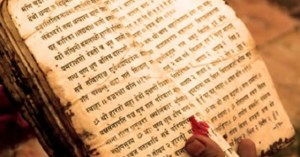
I. Veda :
-
The Veda is also called ‘ Shruti ‘ because this knowledge was preserved by transferring it from generation to generation by hearing.
-
Brahmi Script which was written in almost 400 BCE is said to be the mother of all scripts in India.
1. Rigveda :
-
Rigveda contains a collection of hymns i.e. total of 1028 hymns.
-
It is divided into 10 MANDALAS (A mandala is a spiritual and ritual symbol in the Indian Religions of Hinduism, Buddhism and Jainism representing the universe).
-
Mandala 2 – 7 are the oldest Mandalas.
-
Gayatri Mantra (Savitri Mantra) was written by Vishwamitra in Mandala – 3. Here, Savitri / Surya(Sun) is worshipped.
-
Soma-God (Lord of Plants) is described in Mandala – 9.
2. Samaveda :
-
Samaveda is said to be the Book of Chants (veda of Melodies & Chants). It can also be said as the smaller version of Rigveda.
-
The hymns of Rigveda is set to a tune in this veda where recital of tune is as per blessing.
-
This book is also sometimes called as the Book of Melody.
3. Yajurveda :
-
Yajurveda deals with all rituals, ceremonies, animal sacrifices to be followed at the time of recital.
-
Development of Vedic Maths, Astronomy came from this veda.
4. Atharvaveda :
-
Atharvaveda deals with all those magical hymns to get rid of diseases.
-
Indian Medicine i.e. Ayurveda is also the application of Atharvaveda.
Want to know about Lithic Age. Click here
II. Brahmana literature :
-
The detailed explaination on vedic hymns is found in Brahmana Literature.
-
It was basically based on Agriculture, trade and laws.
III. Aranyaka literature :
-
The Vedic Mantras are not so straight in meaning, they are explained simply in Aranyaka literature.
-
It deals with ‘ Mysticism ‘ of vedic hymns.
Want to know about Indus Valley Civilization. Click here
IV. Upanishads :
-
The meaning of Upanishads is to sit near the feet of Guru.
-
It is known as the Path of Knowledge.
-
There are a total of 108 Upanishads.
-
The ultimate goal according to Upanishads is to reach our ‘ Universal Soul ‘ i.e. ‘ Salvation ‘.
-
Shankaracharya consolidated the doctrine of Advaita Vedanta which was based on non – buddhism.
-
Swami Vivekananda inspired from Advaita Vedanta, started ‘ Ramkrishna Paramhansa Mission ‘ who said ‘ Service of Man is service to God ‘.
-
The most important Upanishad among the 108 Upanishad is ‘Mundaka Upanishad’.
-
‘Satyameva Jayate’ which means ‘Truth alone triumps’ is taken from Mundaka Upanishad.
Want to know about Features of Indus Valley Civilization. Click here
V. Vedanga :
-
Vedanga are six auxilliary disciplines of Hinduism that developed in ancient times, and has been connected with the study of the Vedas.
-
There are 6 vedangas which are also called limbs of veda. They are –
1. Shiksha Vedanga : Phonetics (Speaking languages).
2. Kalpa Vedanga : All rituals & ceremonies.
3. Nirukta : Origin of words.
4. Vyakarana : Rules of grammer.
5. Chhanda : Rules of poetry.
6. Jyotish : Astronomy.
 SSC RRB Notes